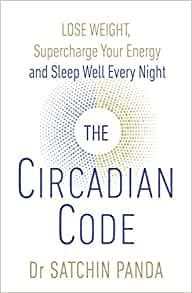
Having read the book “Circadian Code” by Professor Panda, I felt compelled to write a brief summary of his work and recommendations, which he has form through research studies over many years. I feel it offers a valuable approach to physical and emotional wellness so I hope people will find this summary helpful and will potentially consider making lifestyle changes based on Prof. Panda’s recommendations.
Every Organ Has Its Own Clock
It is clear from Professor Panda’s research and that of many other professionals that sleep disturbance is a 24-hour issue and that this is down to our body’s natural circadian rhythms that run over a 24 hour period. Professor Satchidananda Panda, of the Salk Institute in California, is a leading expert in the field of circadian rhythm and whose research focuses on how we approach sleep, eating and activity as a way of improving our sleep patterns, weight loss, physical health and emotional wellbeing.
A central discovery over recent years has been that every organ, cell and DNA has it’s own 24 hour clock, each working in some way independently, while also working as a collective with other cells, organs and systems within the body. This means that for every tissue there is a hidden time code to how our body operates. For example, the clock in our digestive system has specific times to trigger the production of gut hormones for hunger or satiety, to produce digestive juice to digest food, absorb nutrition, influence the microbiome (collection of microbes in our gut) to do its job, and when to move waste out of the colon. There are certain times of day therefore that it will work more effectively than others. The clock in the pancreas dictates the times to produce more insulin and when to slow that production down. Similarly, clocks in our body’s muscle, liver, and the fatty tissue to do a similar job of adjusting how associated organs function. The pathway related to energy metabolism is circadian, which affects how our cells and muscles work and for the processing of specific nutrients. There’s a circadian clock for maintenance of cells relating to chemical reactions throughout the body as well as the natural daily repairing and recycling of cells and the creating of new cells. Our body is being repaired and rejuvenated every day in line with a particular rhythm set by our internal circadian clocks. In fact, the body’s ability to continually repair itself, through the production of new replacement cells, does not happen randomly. It is designed to work at a specific time of the day, that being at night, when we’re asleep, which puts and added importance to the quality of our sleep.
The discovery of these various circadian clocks has been interlinked with optimal functioning of the body and an acknowledgement of the impact of when 1) sleep or light exposure is disrupted, 2) our eating patterns are changed, and 3) the affects of activity and exercising at different times of the day. This has highlighted the importance of not just what we do, but when we do it. Work in this area has drawn links to the management of various physical and mental health issues including: obesity, disrupted sleep or insomnia, diabetes, heart disease, high blood pressure, high cholesterol, pain, allergies, chronic inflammatory issues or diseases, persistent lethargy or chronic fatigue, depression, bipolar, anxiety, attention issues or disorders, memory issues, difficulty with decision making, digestive issues or diseases including acid reflux or irritable bowel syndrome (IBS), weakened immune system, and cancer. This list is not exhaustive yet shows the broad implications of the area of circadian rhythms.
There are three core collective rhythms (sleep, eating and activity) that work together to coordinate the function of all the body’s circadian clocks and their working together form the essential foundations of health. They have been found to be all connected and influenced by our lifestyle. A disruption in any of these three rhythms can affect our body and compromise the optimal function of any one organ or system. And these disruptions can be improved through the changes to our daily habits that help to realign these systems.
Rhythm 1: Sleep and light exposure
Dr Panda suggests that the day starts the night before, such that what we do (e.g. when we eat, what light we’re exposed to and what activity we do) has an effect on how we sleep and that this can have a significant knock-on effect to how we feel in ourselves and how our body functions the day.
Also, when you wake up, open your eyes, and get out of your bed, that first ray of bright light entering your eyes activates special light sensors in your retina, known as melanopsin, that are hard-wired to a master clock in our body, known the suprachiasmatic nucleus (SCN), and when exposed to enough light will set off a process telling the body that morning has arrived.
This Master Clock (SCN) in our body is located within the hypothalamus (the centre of the base of the brain). It controls for hunger, satiety, sleep, fluid balance, the stress response, and more. When the SCN gets reset by light, it also triggers the resetting of all the various clocks that are in the hypothalamus as well as other clocks in the body, such as the liver and gut clocks, which are influenced by both the SCN and when we eat. Melanopsin cells in the retina of our eyes, which trigger this master clock, are sensitive to blue light, which explains why our day / light cycle are so sensitive to artificial blue light in the evenings. And also, why soft orange, red and candle light has a lot less of an impact. This has shown the importance on the early morning exposure to light.
This also indicates that our sleep patterns and our exposure to light is a 24 hour issues, following the boost of cortisol in the morning, which is associated with alertness. As cortisol lessens through the day, our production of melatonin, which helps our body switch off and induces sleep, increases as the day progresses. The increase of the sleep hormone, melatonin, can be disrupted by exposure to blue light, such as with artificial light and device screens. This exposure to blue light after the sun has gone down can confuse the body’s natural circadian rhythm and fool it in to thinking it is still day time.
The light sensors in our eyes have high threshold in morning, meaning they need lots of light to trigger and let the body know it is time to switch on for the day. Therefore exposure to a lot of light is an important activity first things in the morning – with natural light being the easiest way to do this. We however have a lower threshold for light after the sun sets and night falls, meaning we need very little artificial light in the evening to trigger disruption and confusion within our circadian system. It is the blue light contained within artificial light that is the most disruptive and is most commonly found in devices such as mobile phones, computer and TV screens etc as well as in our light bulbs round the house.
Dr Panda also calls in to question the notion of morning larks and night owls, suggesting that people who are out of rhythm of the typical night and day cycle may have disrupted circadian rhythms. He suggests we all have a similar sleep clock, where we each need 7-8 hours as adults (9 hr as children). This natural timing is more aligned with the cycle of natural light (waking with sunrise and going to bed shortly after sunset) and patterns that are significantly different could be due more to lifestyle and environmental factors rather than a natural propensity for that particular pattern. Difficulties with sleep, weight or health could benefit from aligning more closely to this the natural circadian rhythm and as this more commonly related to lifestyle patterns means that there are changes that people can make that can have a significant impact. He suggests correcting these habitual behaviours are in fact vital to improving our natural circadian rhythm and our health.
Rhythm 2: When we Eat
Professor Panda and his team conducted a seminal study exploring the significant impact of when food is eaten using mice studies. They gave two groups of mice the exact same type of food – high fat and highly-processed carbohydrates – and both groups ate exactly the same amount of calories. The only difference was the time period in which they ate their food. One group had food available 24 hours a day, the other group could only eat within a 10 hour window, which was aligned with their usual day cycle. The mice who could eat at any time became obese and developed associated health conditions (diabetes, high cholesterol, heart disease, fatty liver, poor sleep and inflammation), while the time-restricted group did not – they did not gain excess weight and remained healthy. A similar study was conducted with already obese mice, where the mice placed on the restricted eating time lost this excess weight even when eating the same food and same qualities as the control group eating at any time. The only difference here being the time window, which Dr Panda suggests clearly indicates that when we eat is as important as what or how much we eat. They have called this pattern of eating Time Restricted Eat (TRE), and a window between 8 and 12 hours has been found to be beneficial to weight loss, improvements in sleep and health issues, where the 8 hours is optimal.
They extended their research to the human population by asking people to record each thing they ate and drunk throughout the day. They have found that the first time we eat (or drink, e.g. a coffee or tea) after waking resets our organ clocks and when we eat can be a major distruptor to our central SCN master clock. The entire process of digestion, absorption, and metabolism is triggered every time we eat and even a small amount of food can take an hour or two to process, and typically takes a lot longer at night (from around 10 pm onwards). Even drinking anything other than water tends to trigger this process. Although most people report eating within an approximate 10-12 hour window, Dr Pandas studies have shown that people have an average eating period closer to 15 hrs, if not greater. This window would include when you include your first bite to eat or first cup of tea or coffee with milk when you wake up and your last glass of wine or snack before bed for example. What Professor Panda has also found is that even when they fed mice a healthy diet over a 15 hour period they also became overweight, mirroring what they have found with humans. People involved in their human studies have found they lost weight, improved sleep and reversed many poor health markers by switching from this 15hr+ window down to 8-12 hour eating window.
The body seems to therefore functions best with a Time Restricted Eating (TRE) window. A 12 hr window between your first meal and your last is a good target. The benefits seem to double for every hour you reduce this window with a short 8 hour window being optimal. After about a 12 hour window the process of digestion starts to slow down and become less efficient. Eating after this time can prolong the digestion time and mean that blood sugar remains in our blood stream for longer. Late night eating gives our body less time to break down foods and move on to the critical process of fat-burning and repairing the natural damage caused to our body’s cells over the day.
Rhythm 3: Activity and exercise
Dr Panda has found that the effect of activity on our body’s clocks is also very significant. Our body is designed to be active throughout our waking hours and many research studies have all concluded that physical activity improves sleep and our circadian rhythms. The type of activity can range greatly, from the more rigorous activities in the gym or through organised sports, to dancing, gardening or walking. In fact, any form of movement that results in expending energy is classed as physical activity and will contribute to an improved circadian rhythm and therefor your sleep cycle. The body’s best time for exercise is in the morning before breakfast or mid to late afternoon (around 16:00). With this afternoon time being when we are at our peak athletic performance.
Recommendations
Based on the above, here is a summary of the recommendations from Professor Panda’s research and his knowledge of this field:
Light / sleep
- The biggest influence on our circadian clock is light, due to our body both predicting and responds to lighting as a cue for when to wake and when to switch of for the day.
- Aim to get light exposure as close to when you wake up as possible. For at least 5-15 minutes. For example taking a walk, heading in to the garden or looking out the window for your first activity of the day.
- Research high Lumen lights, such as SAD” lights or “daylight LED” lights, to compensate for the dark mornings in winter.
- Avoid or reduce the use of devices at least an hour before bedtime
- Switch off or dim lights that are not needed to reduce exposure to light.
- Switch on mobile phone apps that reduce blue light – these come as standard on android and iphones in latest updates, otherwise search for “Blue light filter”.
- Try to leave your bedroom for sleep and sex only, so your brain can associate the bedroom with just these activities. Removing your TV from the bedroom can be of value.
- Caffeine takes a long time to leave your system, with half of the caffeine remaining in your body 6 hours later. This can disrupt our sleep clock significantly. Therefore it is recommended that you have your last coffee, chocolate, tea etc no later than 2pm.
Your eating window – following Time Restricted Eating (TRE) guidelines
- Initially aim for an eating window of 12 hours, and work towards an optimal 8 hour window if manageable. Settle on what works best for you and your body.
- Wait at least 1 hour before eating (or drinking anything other than water) for the first time each morning, in order to give you body clocks time to wake up.
- Start your eating window earlier rather than later. An example may be eating breakfast at 8am and having your last meal round 6-7pm (depending on your target eating window).
- Ensure you finish eating (or drinking) 3-4 hours before you go to bed.
- Use this early meal time as an opportunity to eat socially with family and friends, shifting how you socialise possibly.
- There is no limit on calories with this approach, so no need to do calorie counting.
- There is no restrictive, prescriptive diet recommendations with TRE, however a whole food style diet rich in vegetables and fresh fruit, while limiting processed foods from your diet (for example foods high in sugar, white flour (bread, pasta etc) and unhealth fats) is recommended.
It tends to take 12 weeks to really embed a new habit due to the time it takes to change our patterning of our DNA, know as our “epigenetic code” and neural pathways in our brain. If we can sustain changes for this period, and weather the difficult periods (usually around 6-10 week) we stand a much better chance of persisting with changes in the long term. The suggestions described here are viewed as long term lifestyle changes and the hope is you will incorporate them in to your life in the same way people tend to wash their teeth – where these changes become just part of your daily routine.
Dr Panda’s book is full of really important information and guidance. He further describes how living in opposition to each of these core rhythms affects our microbiome (the collection of good bacteria in our gut), metabolism, immune system, brain and others. He also explores what you can to do to reverse problems in these areas if you are in poor health. Dr Panda suggests “A healthy lifestyle includes what and when you eat, when and how much you sleep, and when and how often you move”. By including the “when” we do things within our lives and living in alignment with our internal rhythms, we can harness the inherent power of own circadian body clocks to reap the benefits of better sleep, optimum weight loss and improved health.
It is also important to consider other factors that may disrupting your management of sleep, weight and other health issues. It is important to consider stress-management and its impact on sleep for example or addressing someone’s underlying unmet needs often at the heart of emotional imbalances or behaviours such as emotional eating. And although this approach may positively impact psychological issues such as anxiety and depression, there are many factors that can contribute to these and they may need different approaches such as talking therapies to make lasting change.
I have found Dr Panda’s work and this book fascinating and helpful and would therefore invite you to explore more of his work if this short summary has sparked your interest. Below is a list of further resources.
Further resources:
Ted Talk: “Health lies in healthy circadian habits” (YouTube) by Prof. Panda
Book: The Circadian Code: Lose weight, supercharge your energy and sleep well every night
Podcast: Why When You Eat Matters with Professor Satchin Panda PART 1 & 2 by Dr. Rangan Chatterjee
Articles: Dr Panda’s research website (mycircadianclock.org) has a number of useful blog articles
App (free): To help you align your meals to “Time Limited Eat (TLE)” there is a free app called myCircadianClock. In signing up you will also be contributing to this are of research as part of an ongoing study. Read more at mycircadianclock.org.
Shorter published version of this summary in Pain Matters, Issue 72.
Summary by:
Dr Matt Wardley
Counselling Psychologist


